How to Choose the Right Fabric for Your Bespoke Suit
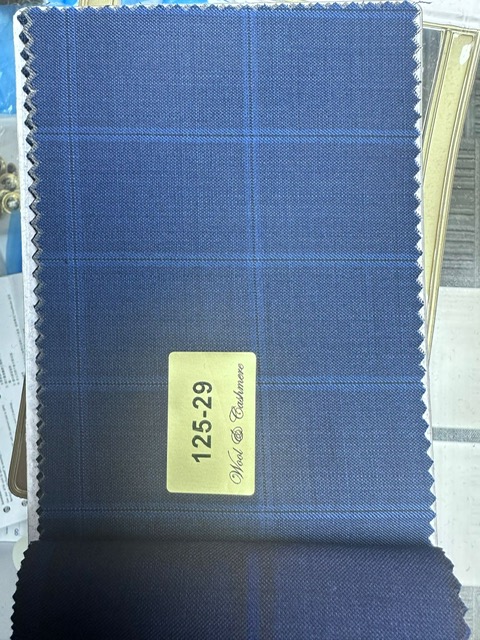
The fabric you choose for your bespoke suit will define the garment for decades. It affects the drape, the feel, the durability, the care required, and ultimately the statement your suit makes about you. Yet despite its enormous importance, fabric selection is often the aspect of bespoke tailoring clients feel least confident about.
After 45 years of guiding clients through this decision, I have learned that there are a handful of key questions that, once answered, make the choice remarkably clear.
1. Consider Your Climate First
The most fundamental factor in fabric selection is where you live and where you will wear the suit. A heavy Super 130's flannel that keeps a London banker warm through a grey February will be unbearable in Singapore or Dubai. Conversely, a beautiful tropical weight worsted perfect for Hong Kong summers will offer no warmth on a Scottish autumn morning.
The weight of a fabric is measured in grams per square metre (g/m²). As a general guide:
- Under 220g/m² — Tropical and summer weight. Ideal for warm climates and summer months.
- 220–280g/m² — Year-round weight. The most versatile choice for temperate climates.
- 280–340g/m² — Autumn/winter weight. Ideal for cooler climates or those who prefer a more substantial feel.
- Over 340g/m² — Winter weight. Overcoating and heavy suiting for cold climates.
For clients who travel internationally and need a suit that works in multiple climates, I typically recommend a mid-weight Super 120's or Super 130's worsted around 260g/m². This is the true "year-round" weight that performs admirably in most conditions.
2. Understand the Super Numbers
When shopping for suiting fabric, you will frequently encounter terms like "Super 100's", "Super 120's", or even "Super 200's". These numbers refer to the fineness of the wool fibre used to make the fabric — specifically the maximum diameter of the individual wool fibres measured in microns.
A higher Super number means thinner, softer, more lustrous fibres. Super 100's is an excellent, durable everyday suiting fabric. Super 120's is softer and more refined. Super 150's is extremely fine and luxurious. Super 200's is at the pinnacle of what is technically achievable in wool weaving.
However, I must offer a word of caution: higher Super numbers are not always better. Extremely fine fabrics (Super 160's and above) are more delicate and less resistant to daily wear. For a suit that will be worn frequently, Super 110's to Super 130's offers the best balance of quality, durability, and value.
3. Choose Your Fibre Type
Beyond wool, we work with a range of natural fibres, each with distinct characteristics:
Cashmere is the most luxurious option — incomparably soft, lighter than wool for its warmth, and with a beautiful lustre. However, cashmere is more delicate than wool and requires more careful handling. A cashmere suit is a statement of the highest luxury but is better suited to occasional wear than daily use.
Linen is the quintessential summer fabric — breathable, moisture-wicking, and distinctively textured. It creases easily (some consider this a feature, not a flaw) and is ideal for warm climates, summer events, and casual occasions.
Cotton is the workhorse of casual suiting and shirting. It is versatile, washable, and comfortable. Cotton suits are ideal for casual business environments, warmer seasons, and relaxed occasions.
Wool/cashmere blends offer the best of both worlds — the durability and structure of wool combined with the softness of cashmere. These are excellent for business suiting where luxury is valued but durability is also required.
4. Select Your Pattern
Once you have decided on your fibre and weight, the final major decision is the pattern. The most versatile options are:
Plain weave (solid colours) are the most versatile of all. Navy, charcoal, and mid-grey are the three essential colours every man's wardrobe should contain. A plain navy suit will work in virtually every business and smart-casual context worldwide.
Pinstripe and chalk stripe add visual interest while remaining business-appropriate. Pinstripe in charcoal or navy is a classic business choice. Chalk stripe in grey is slightly more relaxed and has a heritage British quality to it.
Prince of Wales check is a timeless British pattern that has been worn by generations of style icons. It works beautifully in a sports jacket context and, for the confident dresser, as a full suit.
Tweed and herringbone are the choices for sports jackets, country attire, and relaxed tailoring. Harris Tweed in particular has a timeless quality and improves with age and wear.
5. Our Recommendation
If you are ordering your first bespoke suit and are unsure where to begin, I always recommend the same thing: a plain navy, Super 120's worsted wool in a year-round weight (around 260g/m²). This is the single most versatile garment in a man's wardrobe — appropriate for business, weddings, smart dinners, and even black tie in less formal contexts.
From this foundation, you can build your wardrobe with a charcoal grey, then a mid-grey, then explore patterns, weights, and fabrics as your confidence grows.
Whatever your choice, the most important thing is that you wear it confidently. A suit made specifically for your body, in a fabric you love, for occasions you genuinely attend — that is the very essence of bespoke tailoring.
Richard has been creating exceptional bespoke garments for over 45 years. Based in Hong Kong, he serves clients across 40+ countries.